Cross-species Specific Primer Design with MP-Ref

Designing primers with excellent cross-species specificity using MP-Ref (demo link).

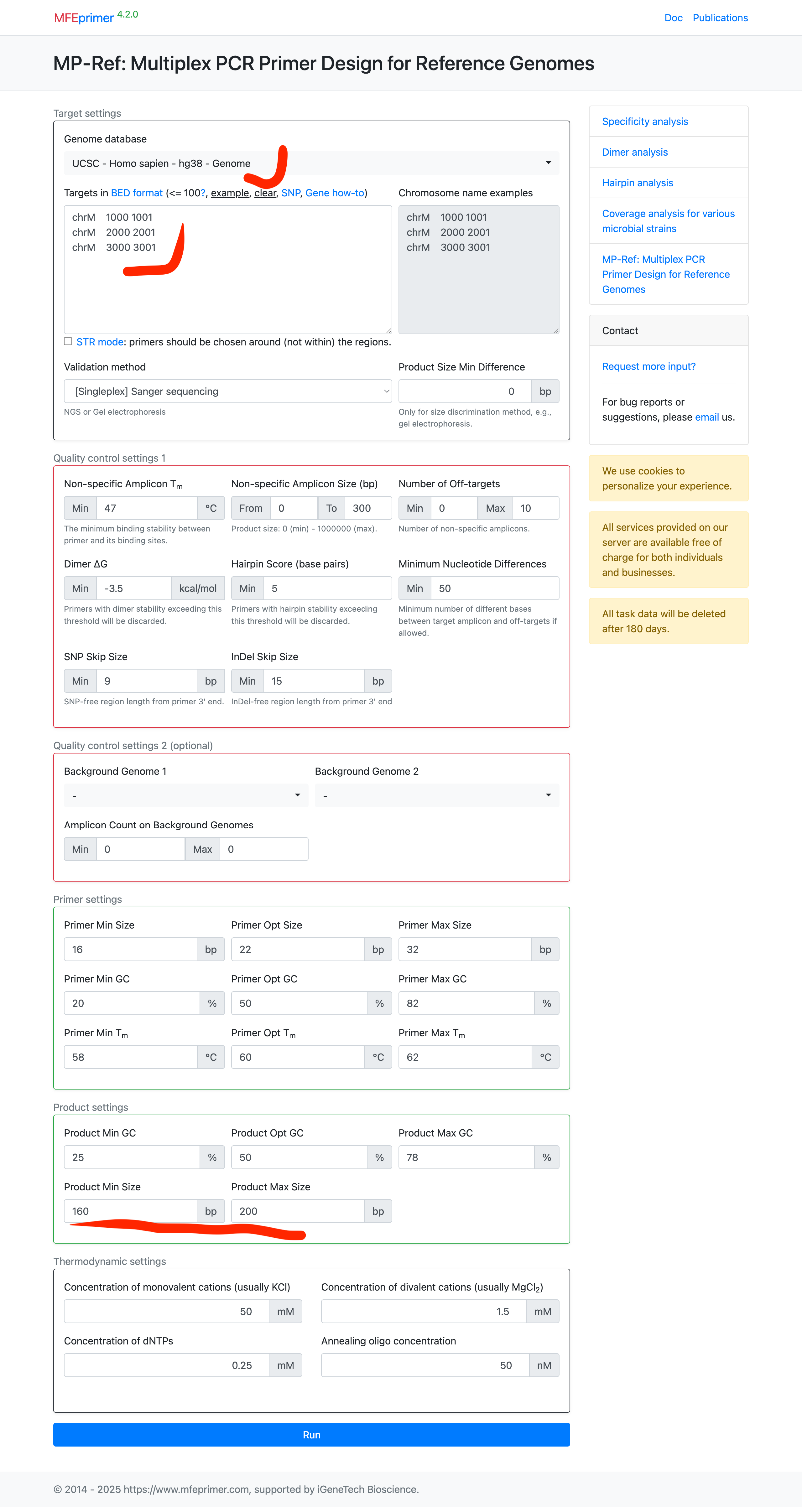
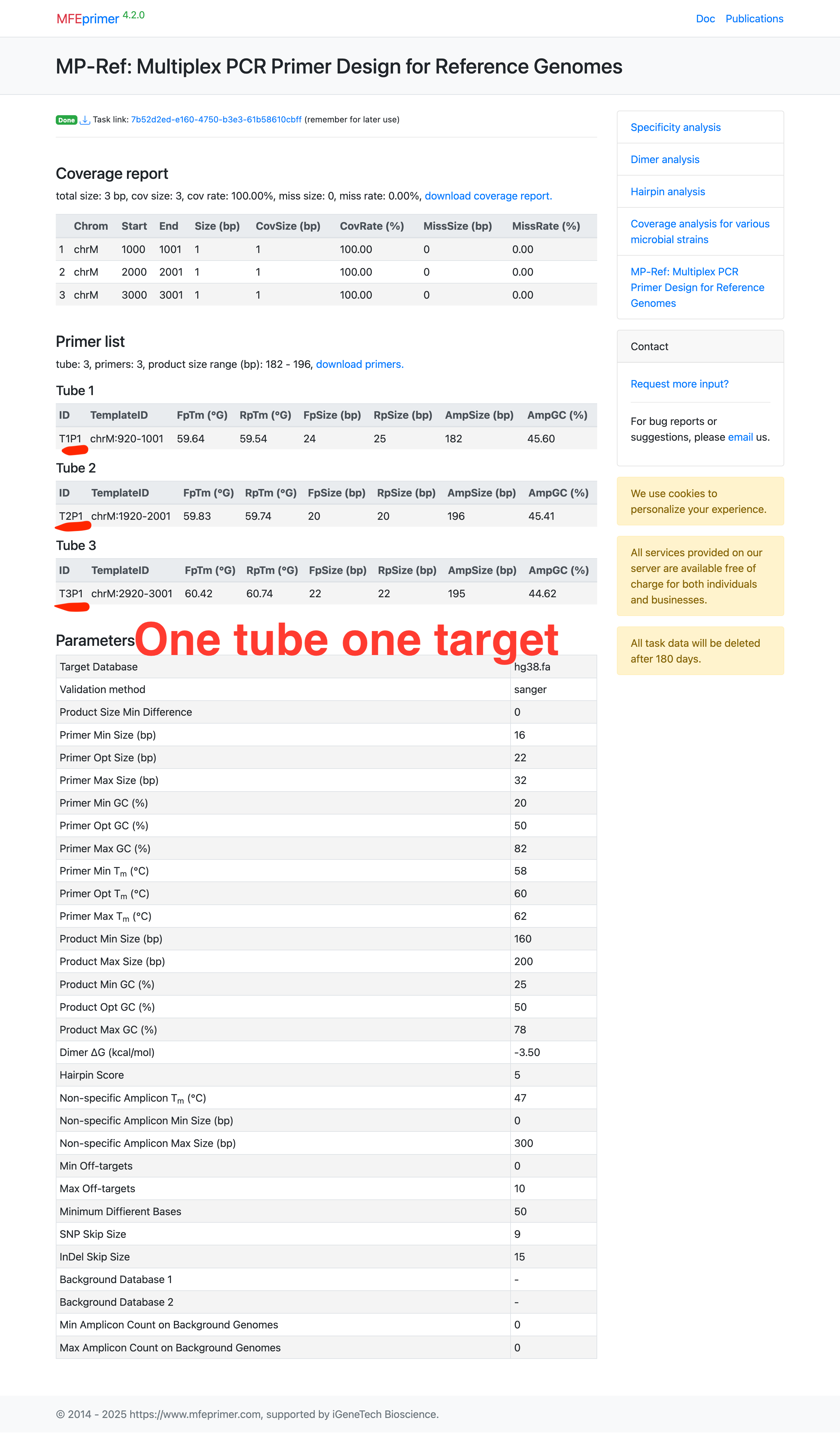
  1. Select the target database;
  2. Enter the targets in BED format;
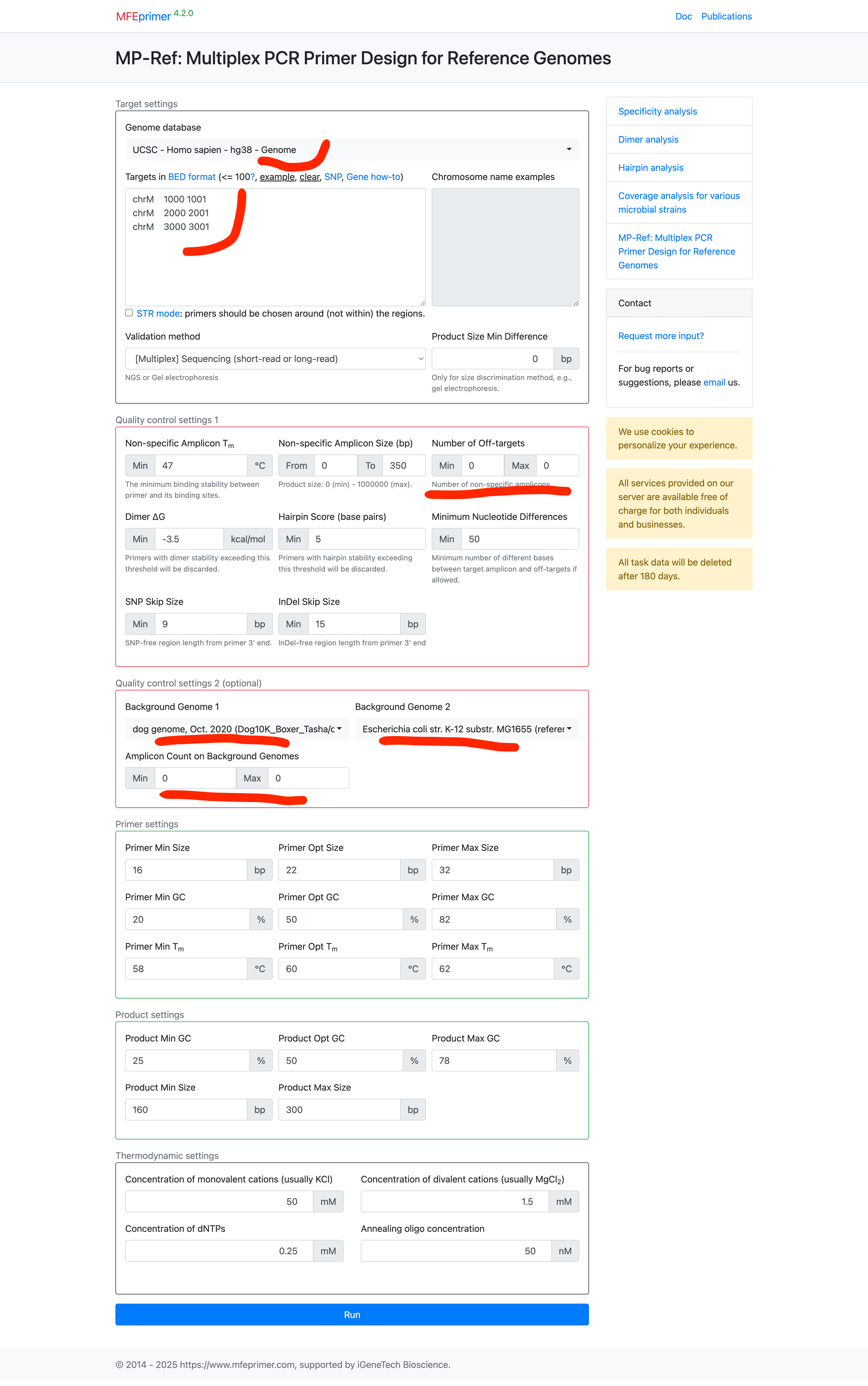
  3. Also select “dog” and “E. coli” as backgrounds databases;
  4. And set “Min=0 Max=0” both for “Number of Off-targets” and “Amplicon Count on Background Genomes”; example 2 input
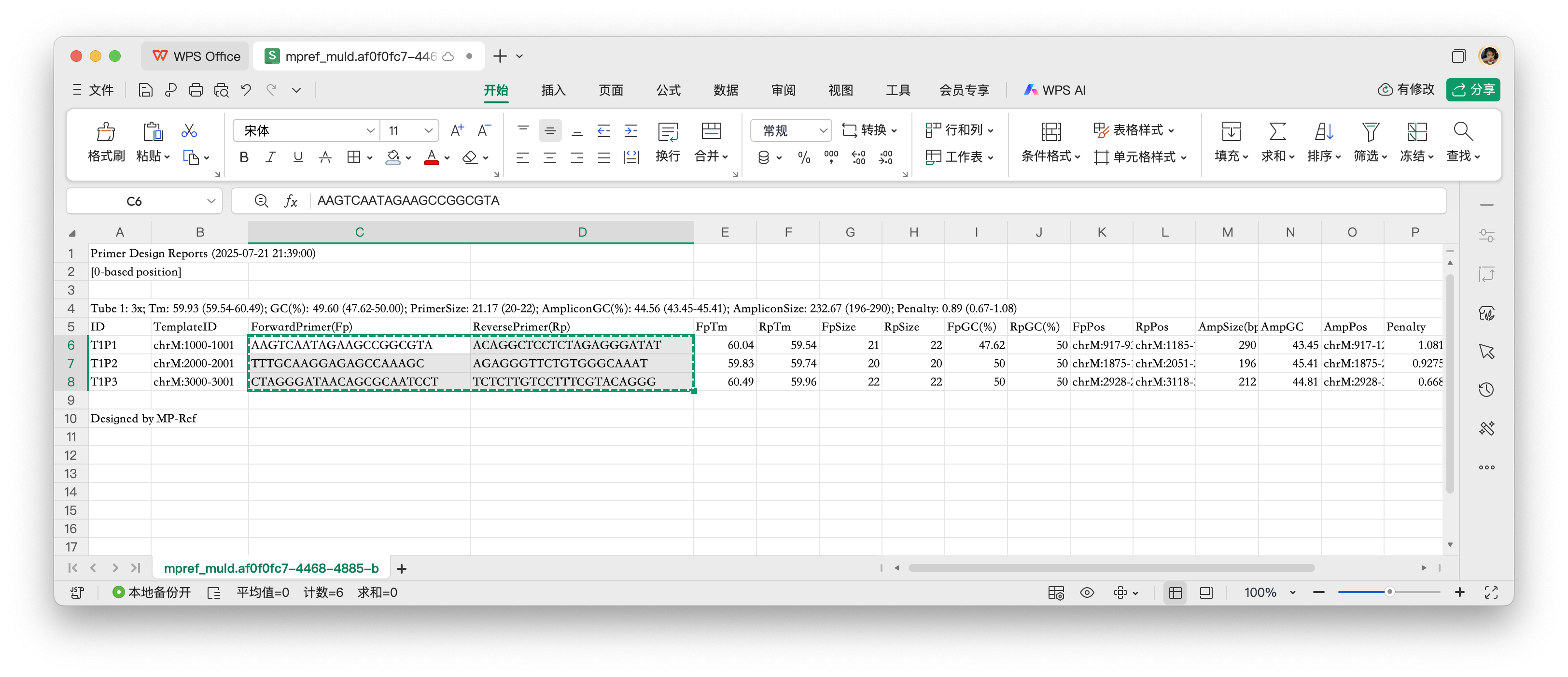
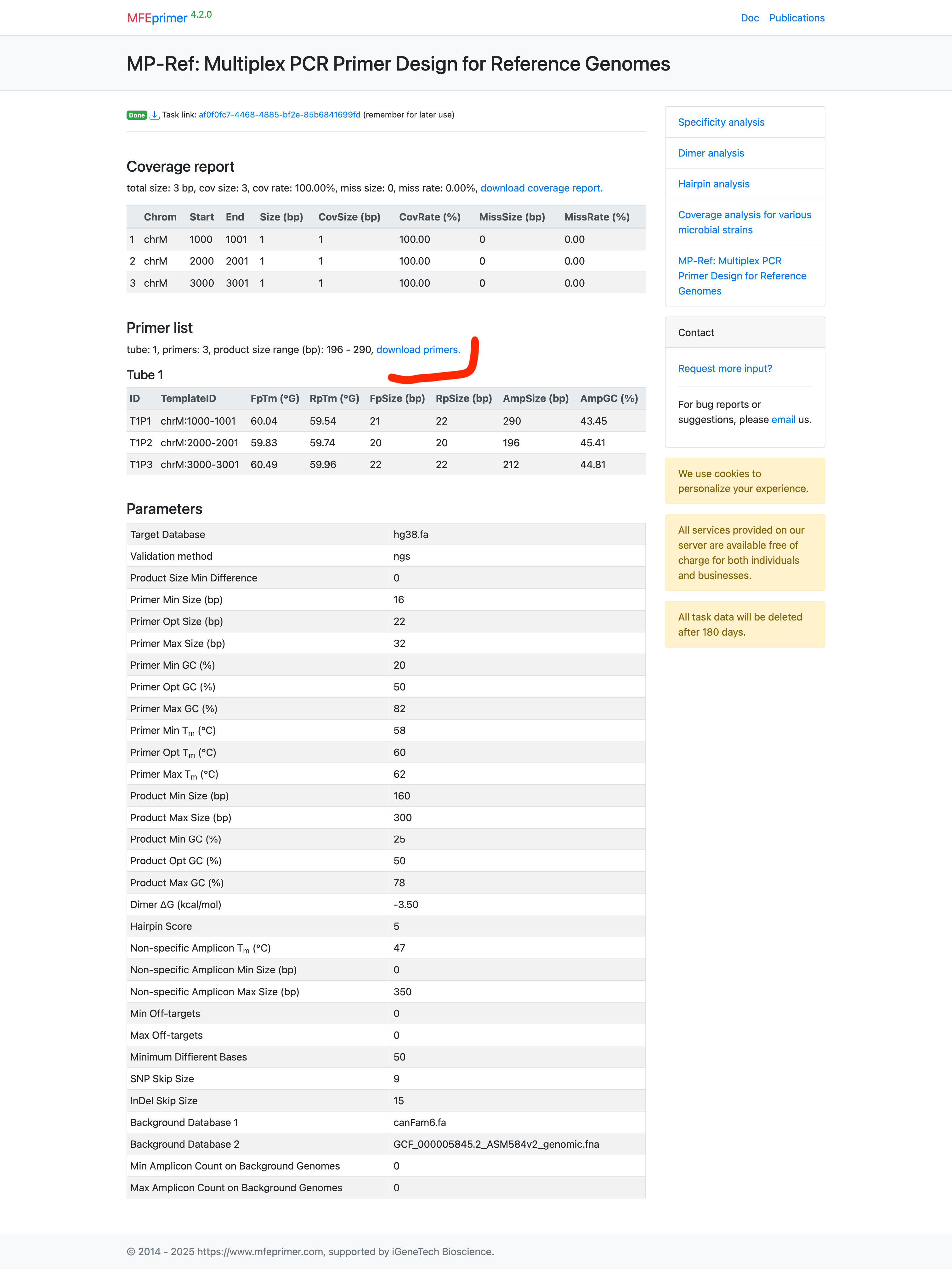
  5. Download the primers and open it in Excel; example 2 result example 2 result
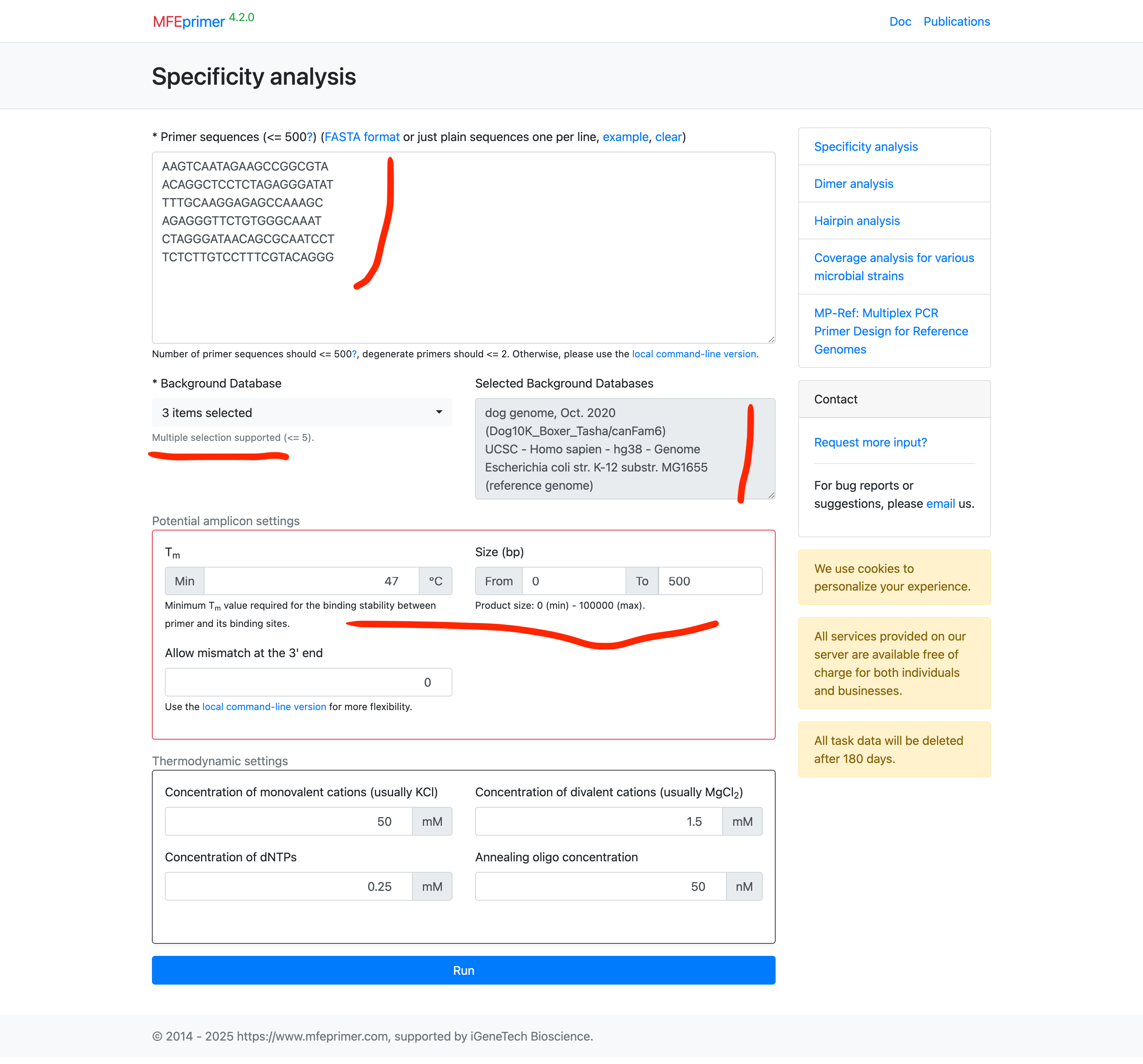
  6. Copy the primers and paste to MFEprimer for validation: https://m4.igenetech.com/spec/. Select the three databases which we used for designed primers. example 2 result
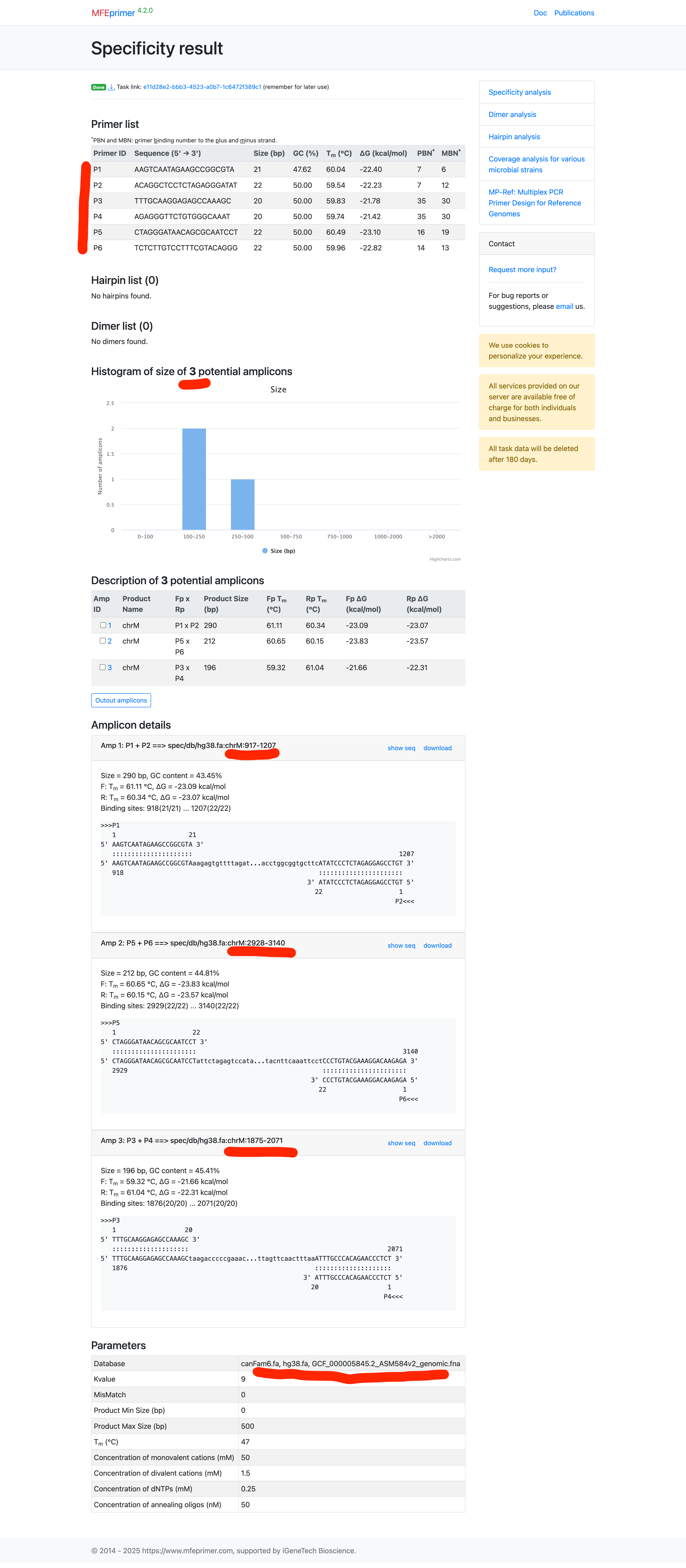
  7. MFEprimer shows only the three target amplicons as we expected (demo link). example 2 result
Multiplex PCR Primer Design for Long Target Regions with MP-Ref

What’s “Long Target Regions”#

If next-generation sequencing (NGS) or short-read sequencing (e.g., PE150) is used to validate amplicons, target regions ​longer than 200 bp​ should be considered ​long target regions (LTRs)​. This is because the total amplicon length (including primer sequences) should not exceed ​300 bp.

The Primer Design Strategy for “Long Target Regions”#

For ​long-range genotyping (LRG) targets > 200 bp, a ​tiling primer design strategy​ is typically required, often necessitating ​amplification in two separate tubes. MP-Ref automatically group the primer pairs into two different pools.

Multiplex PCR Primer Design for Repeat Region (SMN1 whole gene) with MP-Ref

Primer Design for SMN1 Whole Region#

The whole genome sequence of SMN1 has a near identical repeat sequences is from SMN2. Primers for SMN1 also can amplify sequences from SMN2 and can’t be avoidable. So for NGS validation, mutations from amplicons sequencing may need to further validation, like Sanger sequencing, which design primers with amplicon size large engouth to skip the repeat region.

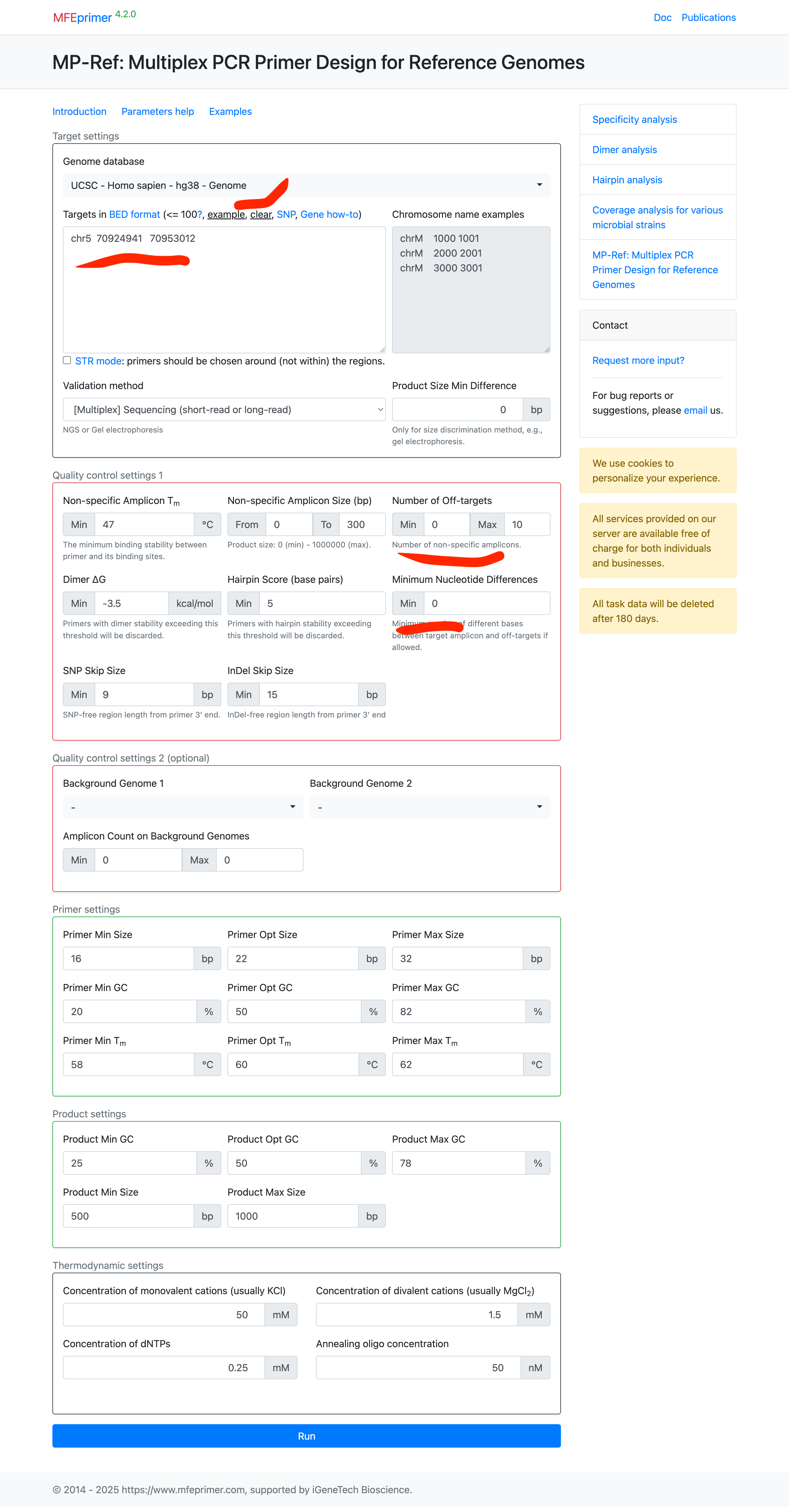
https://m4.igenetech.com/muld/demo/e7cd1164-3441-4a50-8c76-1862ef09f6aa

  • Input: chr5 70924941 70953012;
  • Genome: hg38;
  • Set “Min=0” for “Minimum Nucleotide Differences”, otherwise, MP-Ref will run 20+ hours to find very specific primers and will fail eventually.
  • Other options: default

Input

Multiplex Primer Design With Varied Sizes using MP-Ref

This is an example for desinging primers with different amplicon sizes for gel electrophoresis (demo link).

  1. Select the target database;
  2. Enter the targets in BED format;
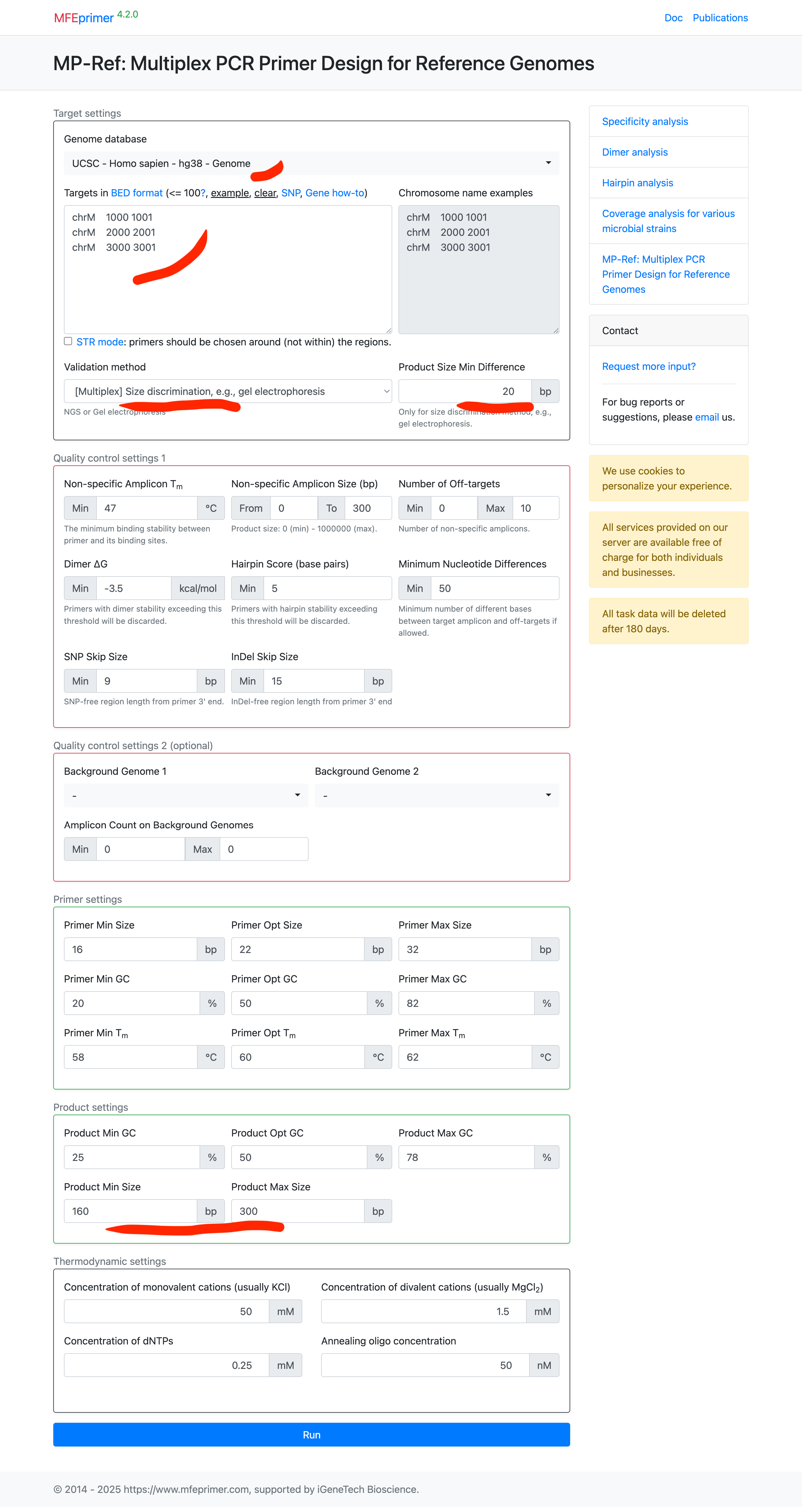
  3. Choose “Validation method” = “[Multiplex] Size discrimination, e.g., gel electrophoresis”;.
  4. And set the “Product Size Min Difference” = 20, this parameter requies the size difference of each amplicons should >= 20 bp. example 4 input
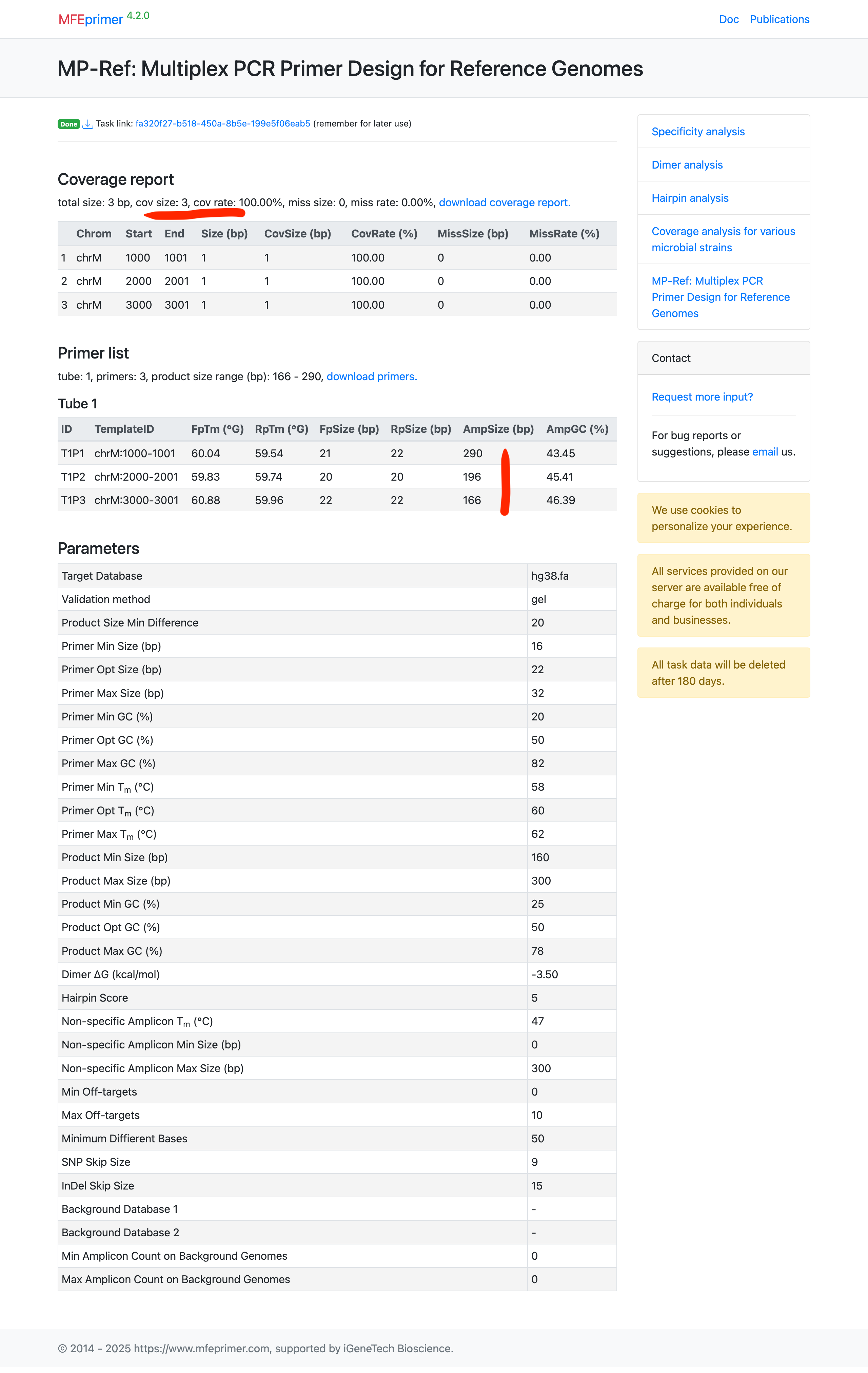
  5. As expected, the three amplicons have enough size differences which we can discriminate them by gel electrophoresis. example 4 result

Simutaneously Amplify Two or More Genomes with MP-Ref

Designing primers capable of amplifying both genome A and genome B simultaneously using MP-Ref (demo link)。

  1. Select the target database: this time we design primers for mouse and requires these primers should also have exactly one amplicon in human genome. Please be noted that we also set “Min nonspecific amplicon Tm” = 57, a bigger higher Tm. This is to tell the server we need a good (with Tm close to the target amplicon in mouse genome) amplicon for human genome.

STR mode

What’s the “STR” mode?#

Short Tandem Repeats (STRs) are regions within the genome consisting of multiple repeating DNA sequences. The STR mode is specifically tailored for designing primers to amplify regions flanking STRs or any target regions intended to be amplified in their entirety.

In scenarios where the target region’s size exceeds the maximum allowed product size, a tiling design strategy is employed with a default setting of two tubes to ensure 100% coverage of the target.

How to get exon coordinates in BED format?

Introduction#

We have a list of genes, like:

EGFR
MET
TP53

And we want the genome positions plus 10 bases at each end for each exons, the results should like:

chr7	116672185	116672587	NM_000245_exon_0_10_chr7_116672196_f	0	+
chr7	116699060	116700294	NM_000245_exon_1_10_chr7_116699071_f	0	+
chr7	116731657	116731869	NM_000245_exon_2_10_chr7_116731668_f	0	+
chr7	116739939	116740094	NM_000245_exon_3_10_chr7_116739950_f	0	+
chr7	116740841	116741035	NM_000245_exon_4_10_chr7_116740852_f	0	+
chr7	116755344	116755525	NM_000245_exon_5_10_chr7_116755355_f	0	+
chr7	116757426	116757549	NM_000245_exon_6_10_chr7_116757437_f	0	+
chr7	116757627	116757784	NM_000245_exon_7_10_chr7_116757638_f	0	+
chr7	116758448	116758630	NM_000245_exon_8_10_chr7_116758459_f	0	+
chr7	116759380	116759500	NM_000245_exon_9_10_chr7_116759391_f	0	+

Method#

UCSC Table Browser do this job perfectly, thanks.

How To Get Chromosome Position Given Rs Number?

Introduction#

We have a list of SNP rs numbers, like:

rs1002315756
rs1003815568
rs1004109382
rs1004635980
rs1008829651

And we want the genome positions for each SNPS, the results should like:

#chrom	chromStart	chromEnd	name	ref	altCount	alts	shiftBases	freqSourceCount	minorAlleleFreq	majorAllele	minorAllele	maxFuncImpact	class	ucscNotes	_dataOffset	_dataLen
chr1	51453	51454	rs1004109382	C	1	T,	0	0				0	snv	rareSome,rareAll,	409400514	36
chr1	51594	51599	rs1004635980	GGGGG	1	GGGG,	4	12	-inf,-inf,0.000127421,-inf,-inf,-inf,-inf,-inf,-inf,-inf,-inf,-inf,	,,GGGGG,,,,,,,,,,	,,GGGG,,,,,,,,,,	0	delins	rareSome,rareAll,overlapDiffClass,	461755619	105
chr1	10042	10043	rs1008829651	T	1	A,	0	0				1986	snv	rareSome,rareAll,	878656298	46
chr1	10320	10321	rs1002315756	C	1	T,	0	12	-inf,-inf,-inf,-inf,-inf,0.00102617,-inf,-inf,-inf,-inf,-inf,-inf,	,,,,,C,,,,,,,	,,,,,T,,,,,,,	1986	snv	rareSome,rareAll,overlapDiffClass,	230771761	107
chr1	52763	52764	rs1003815568	T	1	A,	0	0				0	snv	rareSome,rareAll,	380161821	36

Method#

UCSC Table Browser do this job perfectly, thanks.

About MPprimer

Introduction#

MPprimer: a program for reliable multiplex PCR primer design

BACKGROUND: Multiplex PCR, defined as the simultaneous amplification of multiple regions of a DNA template or multiple DNA templates using more than one primer set (comprising a forward primer and a reverse primer) in one tube, has been widely used in diagnostic applications of clinical and environmental microbiology studies. However, primer design for multiplex PCR is still a challenging problem and several factors need to be considered. These problems include mis-priming due to nonspecific binding to non-target DNA templates, primer dimerization, and the inability to separate and purify DNA amplicons with similar electrophoretic mobility.